Explore the best of

Australia

BOOKER INFORMATION

We don’t need to tell you that Australia is big! 

It’s about 31 times bigger than the UK so there is plenty to see and do, but it does need good planning to make the most of it. 

Each state of Australia has its own government, lifestyle quirks, breathtaking sights which all contribute to Australia’s rich social tapestry.   

The best thing is to be prepared. The Lions tour will take place at the beginning of the Aussie winter so please plan accordingly. Cities like Melbourne, Adelaide, Canberra, and Hobart can get quite cold in the winter months – you’ll need a warm coat, especially at night.  

Coastal Sydney and Perth stay relatively mild during June to September, but rain is not uncommon so remember jackets or coats when you start making your packing lists!  

We have pulled together some great information on all the major Australia cities – check them out now and begin your adventure early. 

MAP OF AUSTRALIA

GETTING TOUR READY

BEFORE YOU GO

WHEN IN AUSTRALIA

PUBLIC TRANSPORT CITY GUIDES

Flights

AIRLINE LUGGAGE ALLOWANCE

FOOD & DRINK

AUSTRALIAN WINE AND WINERIES

LIONS EVENTS

THE LIONS DEN

LIONS EVENTS

THE LIONS Theatre

Australian States, territories and capital cities

FIXTURE CITIES

OTHER DESTINATIONS

destinations outside Australia

LIONS TOUR AU2025 TICKETING APP

Getting to the Stadium

INSIDE THE LIONS CAMP

Ieuan Evans - British & Irish Lions Chairman

INSIDE THE LIONS CAMP

Motorhome

Accor Hotels

LIONS ADVENTURES when travelling with Lions Rugby Travel

FULL TOUR CLIENTS when travelling with Lions Rugby Travel

Lions Theatre Dining Options

More Than Just Rugby!

A spectacle of the best of Rugby on the pitch, The British & Irish Lions Tour has even more to offer. From first-ever Darts competitions to Golf Days, Official Lunches, Fan Zones and globally renowned Host City experiences.

CREDITS:

Tourism Australia 

DISCLAIMER

All information stated in this guide is to the best of our knowledge believed to be correct at time of printing/display and is subject to change without notice. We have used reasonable care and skill to ensure the accuracy of the information provided. Please note information may not be fully accurate and is provided ‘as is’ and in good faith and we do not guarantee that the guide, or any content in it, will be free from errors or omissions. We make no representations, warranties or guarantees, whether expressed or implied, that the content contained in this guide is accurate or up-to-date. We will not be liable to any user for any loss or damage, whether in contact, tort (including negligence), breach of statutory duty, or otherwise, even if foreseeable, arising under or in connection with use or reliance on any content in this guide.

The information provided is general and may not be suitable for your particular needs. You should verify critical information (such as advise about visa and health and safety) independently before you travel.

Where the guide contains links to other sites and resources provided by third parties, these links are provided for your information only. We have no control over the content of those sites or resources. We assume no responsibility for the content of websites referred to in this guide. Such links should not be interpreted as endorsement by us of those linked websites. We will not be liable for any loss or damage that may arise from your use of them.

All information correct at time of publish (April 2025)

Acknowledgement

Lions Rugby Travel acknowledges all Aboriginal and Torres Strait Islander peoples as the First Australians and Traditional Owners of this land. We recognise the culture, history, diversity and deep connection to the earthly elements of Australian land and water.  We humbly pay our respects to Elders past, present, and future of this nation.
PASSENGER INFORMATION

For entry into Australia when travelling on a British or Irish citizen passport, your passport should be valid for the proposed duration of your stay. If you’re transiting another country on your way to or from Australia, check the entry requirements for that country. Many countries will only allow entry if you have at least 6 months validity remaining on your passport. 

For entry into Dubai, Fiji, Malaysia, Qatar and Singapore your passport must have an ‘expiry date’ at least 6 months after the date you arrive.  Make sure your passport is undamaged, with no pages missing. 

If you’re transiting through Dubai airport and not passing through immigration or entering the UAE, your passport must have an expiry date at least 3 months after the date you will transit. 

For Hong Kong your passport must be valid for at least one month after the date you plan to leave Hong Kong.   

Please note that for European travel when travelling on a British passport your passport must be*: 

  •               Issued less than 10 years before the date you enter the country (check the ‘date of issue’)
  •               Valid for at least three months after the day you plan to leave (check the ‘expiry date’)
 

*-You must check your passport meets these requirements before you travel. If your passport was issued before 1 October 2018, extra months may have been added to its expiry date and these will not be valid for travel within the E.U. 


Please note that it has been announced that under new rules, visitors from a list of non-EU countries, including the UK, will need to apply for a waiver, similar to a US Esta, before travelling to 30 countries in Europe. The waiver will cover travel to the Schengen area, which includes every EU state except for Ireland and Cyprus, as well as Iceland, Liechtenstein, Norway and Switzerland.  Therefore, if your flight is via Europe please keep an eye on the press and media as further information regarding this and the application process will be advised. 

For any other destination visit https://www.gov.uk/foreign-travel-advice for the latest travel advice. 


When travelling abroad on an Irish passport the following websites will be of assistance: 

https://www.ireland.ie/en/dfa/overseas-travel/visas-for-irish-people-going-abroad/  

https://www.citizensinformation.ie/en/travel-and-recreation/travel-abroad/    


If travelling on any other nationality of passport, please contact your country’s embassy or consulate for advice. 

MEDICATION, VACCINATIOS & RESTRICTIONS

Check with your health professional or visit https://travelhealthpro.org.uk for more information and advice for the countries you will visit. 


All travellers should be up to date with routine vaccination courses and boosters as recommended in the UK.  


Obtain a Doctors prescription(s) and/or letters if you are taking regular medication. The letter must specify the name of medicine and its dosage. Medication should remain in original packaging with the dispensing label intact. If you arrive carrying medication this must be declared on your Incoming Passenger Card. 


To find out more information regarding taking medication into Australia and see other common medication questions, please visit: 

https://www.odc.gov.au/travellers/travelling-or-australia-medicines-and-medical-devices 


The legal status and regulation of some medicines prescribed or bought in the UK can be different in other countries. 

Read best practice when travelling with medicines at: TravelHealthPro factsheet 


The NHS has information on whether you can take your medicine abroad: https://www.nhs.uk/common-health-questions/medicines/can-i-take-my-medicine-abroad/  

TRAVELLING WITH A DISABILITY

Travelling in a foreign country can present challenges for those with a disability, so it is prudent to seek guidance and advise well in advance of your trip. The Foreign, Commonwealth & Development Office (FCDO) has a very handy webpage intended to provide practical and useful information to help you plan for travel: Disability and travel abroad – GOV.UK

When planning your trip, consider your own situation and needs. As a whole Australia is very well prepared for those with physical disabilities, and those whose disability may be hidden, such as deafness, or a sensory sensitivity such as Autism.

Trains, buses and ferries across the country have features like wide aisles and ramps. Australian airports offer a range of support options. For more information visit: Passengers with disability and reduced mobility | Civil Aviation Safety Authority

Most public transport facilities across Australia use tactile tiles and Braille signs to assist travellers with vision impairment

You will also find that audio induction loop systems are used widely across Australia, which transmit sounds and announcements straight to your hearing aids.

medical conditions

Important – Please advise us in writing of any medical conditions including allergies, disabilities, and if you will be travelling with any medical equipment e.g. a CPAP machine or needles, a minimum of four weeks before departure. If you are travelling with needles in your hand luggage you will need to carry written authorisation paperwork from your doctor in case it is required as supporting evidence when you pass through security. Please complete our medical questionnaire: https://www.lionstour.com/client-health-questionnaire/

VISA REQUIREMENTS

Australia  

For travel and visa advice visit:  Australia travel advice – GOV.UK (www.gov.uk) 

All non-Australian citizens travelling to Australia require a visa or travel authority for entry and this should be obtained before travelling. To identify which visa you require please use the following tool: https://immi.homeaffairs.gov.au/visas/getting-a-visa/visa-finder 

The most common visa is an ETA or eVisitor. Eligible citizens visiting Australia for tourism or business can obtain a visa online. This could be either the eVisitor Australia visa or the ETA (Electronic Travel Authority). 

British & Irish citizens can usually get the following types of electronic visitor visa: 


If you have a confirmed stop-over included in any other country you may require an entrance visa or extra validity on your passport, please check Foreign travel advice – GOV.UK (www.gov.uk) for the latest travel advise and rules when travelling on a UK passport and https://www.ireland.ie/en/dfa/overseas-travel/visas-for-irish-people-going-abroad/when travelling on an Irish passport.  If you are travelling on any other passport please check your government advice. 

HEALTHCARE FACILITIES IN AUSTRALIA

While you are in Australia and travelling on a British or Irish passport you can access essential and urgent medical care through the UK-Australia Reciprocal Healthcare Agreement.

Essential and urgent hospital treatment is free. There is a charge to visit GPs and receive prescriptions. Some costs can be recovered through Medicare, Australia’s universal health insurance scheme. You can enrol with Medicare through Services Australia.

If you’re not covered by reciprocal healthcare arrangements between Australia and the UK, costs of treatment can be high.

Documents you’ll need:

  • A UK / Irish passport with a valid Australian visa
  • A GHIC or UK-issued European Health Insurance Card (EHIC) or Irish issued with the initials IE
  • If you don’t have a GHIC or EHIC, other proofs of UK residency are accepted such as a bank statement or utility bill.


For further information and to see of you are eligible, visit: Reciprocal Health Care Agreements – Services Australia


ON ARRIVAL INTO AUSTRALIA

International arrivals 

You will need to clear Australian immigration/border control at your first point of entry into Australia. If you have an onward domestic flight, you will need to collect your checked in luggage from the international flight after clearing immigration and customs and then proceed to check in again for your onward flight.  Please check your itinerary (or most recent flight schedule/e-ticket) for your flight details. If you have an onward flight and require any assistance on landing, please refer to the ‘Domestic Transfer/Connections’ signage or speak to a member of airport staff. 


Incoming Passenger Card 

During your flight you will be issued with an Incoming Passenger Card (IPC) which is to be completed by passengers entering Australia; it is a document providing passenger identification and an effective record of a person’s entry into the country. IPCs will be provided to you on board your flight before arrival. We would recommend that you have a pen to hand on board your flight and carry this in your hand land luggage.  

To find out more information and see other common arrival questions, please visit: 

https://www.abf.gov.au/entering-and-leaving-australia/crossing-the-border 

KNOW BEFORE YOU GO

The Foreign, Commonwealth & Development Office (FCDO) provides advice about risks of travel to help British nationals make informed decisions.  

Useful Links:

Australia:


United Arab Emirates: 


Fiji:


Malaysia:


Qatar:

 
Singapore:


Hong Kong:


You can also sign up to get email notifications when this advice is updated by clicking the above links.

We would also suggest you follow the Foreign, Commonwealth and Development Office (FCDO) travel on X (formerly Twitter), Facebook and Instagram

Twitter

Instagram

Facebook

TRAVEL INSURANCE

As a condition of your booking on an official Lions supporter tour, it is essential that you have adequate travel insurance in place. Ensure the policy covers your destination, travel dates and includes sufficient cancellation cover and emergency medical and hospitalization.  Remember to take your policy with you, including the emergency contact numbers. 

Howden, the global insurance group, are the Principal Partner of The British & Irish Lions for the next four years and the official front of jersey sponsor for the upcoming 2025 Lions Tour to Australia. 

To receive a travel insurance quote from Howden please visit:  https://www.howdengroupholdings.com/lions  


ABTA  

Provides customers with tips and advice on travel insurance cover which can be found on their website: https://www.abta.com/tips-and-advice/planning-and-booking-a-holiday/travel-insurance  


IMPORTANT

If you have not done so already, please advise us and your travel insurers in advance of travel of any medical conditions including allergies and disabilities by completing our questionnaire:  https://www.lionstour.com/medical/  

CUSTOMS

When entering Australia from overseas declarations must be made for a variety of goods including prohibited or restricted items such as medicines and steroids. Alcohol and Tobacco must also be declared as well as food and drinks, and if you are carrying over AUD$10,000 or foreign equivalent.  

  • State if you are bringing more than 2250ml of alcohol beverage, 25 cigarettes and 25g of tobacco per adult  
  • Food items such as meat, poultry, fish, eggs and diary must be declared 
  • If you have visited farms or places with livestock, or wilderness areas this must be declared 

If you are aged 18 years or over, you can bring up to AUD900 worth of general goods into Australia duty free. If you are under 18 years of age the limit is AUD450.  This includes items purchased as gifts. Good which values exceed these amounts must be declared. 

To find out more information and see other common customs questions, please visit: 

https://www.australia.com/en-gb/facts-and-planning/visa-and-customs/australia-customs-and-biosecurity-faqs.html 


Quarantine of goods 

Australia has strict quarantine rules to keep out pests and diseases that could affect plant, animal or human health. 

When filling out your Incoming Passenger Card you must: 

  • Declare any risk goods including food, animal products and plant material (including wooden articles) 
  • Dispose of any risk goods in the bins at the airport 

All luggage is x-rayed upon arrival. Any items of concern are further inspected, treated and if necessary confiscated and destroyed. You can be heavily fined for breaches of quarantine regulations. 

You can find more information on the Department of Agriculture website.  https://www.agriculture.gov.au/biosecurity-trade/travelling  

You will also be asked to declare whether you have ‘visited a rural area, or been in contact with, or near, farm animals outside Australia in the past 30 days’. 


From 01 January 2024 the Australian Government banned the importation of disposable vapes into Australia. Disposable vapes are e-cigarette devices that cannot be recharged or reused. Vapes containing nicotine can only be supplied through a pharmacy with a prescription. 


Bio-security 

Australia has very strict biosecurity procedures at international borders to prevent the introduction of harmful pests and diseases. Certain food items brought into Australia, even small amounts or ingredients for cooking, need to be declared. 

Hiking shoes, sporting or camping equipment must be cleaned so that no soil material remain to avoid inadvertent contamination. They should be declared to check for soil, plant and seeds so pack them in an accessible place. 


DUTY-FREE/TAX ALLOWANCE ENTERING AUSTRALIA 

  • Goods purchased overseas or duty/tax free in Australia with a combined total price of more than AUD $900 per adult (18 years or over); AUD $450 per child. This includes items purchased as gifts. 
  • Alcohol: Up to 2.25 litres (0.5 imperial gallons or 0.59 US gallons) of alcoholic beverages (liquor, wine and Champagne) per adult. 
  • Tobacco:25 cigarettes or the equivalent of 25 grams (0.88 ounces) of smokeless tobacco products per adult. 
  • AUD$10,000 or more in Australian or foreign currency equivalent. 

CURRENCY

You’ll need some for those pre and post match drinks!

Australia’s national currency is the Australian dollar (AUD) which comes in polymer (plastic) notes of $5, $10, $20, $50 and $100.

Coins are in 5, 10, 20 and 50 cent denominations as well as $1 and $2 denominations.

MasterCard and Visa are both commonly accepted in Australia as well as American Express. Prepaid cards are also widely accepted. Check with your card issuer and bank about transaction fees when using credit and debit cards abroad.

Before travelling to Australia, contact your bank and tell them that you will be travelling and using your credit card overseas. If you fail to inform your bank of your travel plans, your card may be put on hold, and you will not have immediate access to your account!

Pre-loaded currency Mastercard and Visa cards provide a convenient and safe way to spend money overseas. These are available via banks and Foreign Exchange bureau’s and often have favourable rates of exchange.

KEEPING POWERED UP

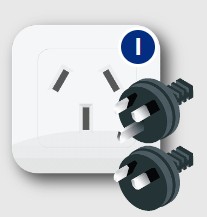
PLUGS AND ELECTRICITY

Australia uses type I power plugs and sockets (outlets). The standard voltage is 230 V at a frequency of 50 Hz. The same plug is also used in Fiji.

Just like the UK and Ireland, the United Arab Emirates (UAE) and Singapore use the 3-pin plug.

Drinking and smoking in Australia

You must be 18 or older to buy alcohol or to drink alcohol in a licensed venue. It’s illegal to sell alcohol to anyone under 18 or to someone who is already drunk. There are some areas where you can’t drink alcohol, and rules vary between each state or territory. 

Due to licencing laws most supermarkets in Australia do not sell alcohol. Beer and wine is generally purchased at liquor stores and pubs. 

You must be 18 or over to purchase tobacco and cigarettes.  In all states and territories, it’s illegal to smoke in enclosed public places and it is also illegal to smoke in a car when a minor is inside. A minor is someone under the age of 16, 17 or 18, depending on the state or territory you are in. 

From 01 January 2024 the Australian Government banned the importation of disposable vapes into Australia. Disposable vapes are e-cigarette devices that cannot be recharged or reused. Vapes containing nicotine can only be supplied through a pharmacy with a prescription.

In Australia, bar opening hours vary significantly depending on the state, local regulations, and the type of license the bar holds. Generally, bars can be open from 10:00 am to 02:00 am or later, but this can vary depending on the location and time of year. To find an open bar in Australia, consider using online resources like The Pass app, Tagvenue, or Australian Venue Co. to explore venues and their opening hours. Additionally, many bars and pubs are now open longer than before, especially in Safe Night Precincts, where they can serve alcohol until 03:00 am.

Reporting an Issue to the Police

To receive a crime reference number in Australia, you need to report a crime to the police. You can do this by calling the emergency number 000 for immediate assistance or by calling the Police Assistance Line on 131 444 for non-urgent matters. You can also visit your local police station in person.  Contact us | Australian Federal Police

AUTOMATED TELLER MACHINE (aTM) IN AUSTRALIA

In Australia, ATMs are almost everywhere. Some Australian ATMs only accept debit cards, so you shouldn’t rely solely on your credit card. It’s often cheaper to use your debit card to make a withdrawal, as you avoid unnecessary charges you would incur when using a credit card. When you contact your bank before traveling, ask if they partner with any banks in Australia that will allow you to use their ATMs without a charge.

Most Australian ATMs give out either AUD$20 and AUD$50 banknotes, which means you can only withdraw combinations of these notes.

Some Australian ATMs (mainly those owned by ANZ), support contactless technology. If you have a contactless bank card, you can tap it instead of inserting it into the machine. However, you’ll still need to key in your PIN. You can recognise contactless ATMs because they have the contactless symbol.

KEEPING SAFE IN AUSTRALIA

Emergency services in Australia 

Tel: 000 (ambulance, fire, police) 

Reporting a crime in Australia

If you are not in danger, call the Police Assistance Line on 131 444. 

Australia is no stranger to major natural challenges, so it is important that you follow the advice of authorities and every sign on the streets or in front of natural reserves or other spaces. 

Dangerous wildlife 

Australia is a diverse country that is fantastic to experience but it also has a number of dangerous animals. Many dangers are obvious but if you think you have come into contact with something serious, please contact the closest medical centre. 

For further information visit:  https://www.australia.com/en-us/facts-and-planning/health-and-safety/faq.html  

Poisons Information Centre: (24-hour advice on all exposures to poisons, medicines, plants, bites/stings etc) Tel: 13 11 26  

Flooding 

Heavy rain and tropical cyclones can cause flooding, including flash floods in some areas. You can get flood warnings from the Bureau of Meteorology and it’s advisable to check local media reports. 

The Bureau of Meteorology’s webiste: http://www.bom.gov.au/

Dust storms 

Dust storms occur regularly in Australia, usually only in outback areas and you should follow the advice of local authorities. 

Heat exhaustion 

To avoid heat exhaustion we encourage you to seek shade where possible and ensure to always bring plenty of water when out and about.

State Emergency Services (SES) (for assistance during floods, storms, cyclones, bushfires etc) 13 25 00  

Safety at the beach

Popular beaches are patrolled by lifeguards and surf lifesavers but you should always take time to assess local sea conditions. https://sls.com.au/ 

  • Always swim between the red and yellow flags on beaches with lifeguards and surf lifesavers. 
  • Look for the beach signs at the entrance to the beach, they have lots of local information and will explain to you the meaning of the signs placed on the beach. 
  • Never swim alone, always with a friend

Never swim under the influence of alcohol or after a big meal. Rip currents are the main surf hazard for all beach users. Rivers and pools can be subject to sudden flash flooding as a result of heavy rain elsewhere in the area. Make sure there is sufficient depth of water before diving, and always follow warning signs. 

Diving safety 

By law you need to complete a medical declaration for resort diving or snorkelling. For your own health and safety, you must be truthful about any medical conditions you have. 

https://www.australia.com/en-gb/facts-and-planning/health-and-safety/water-safety.html  

https://beachsafe.org.au/surf-safety 

Sun safety

Regardless of the time of year, Australia’s sun in powerful so ensure you have sunscreen (SPF 50) and wear a hat even on an overcast day. 

Tap water

Overall, tap water in Australia is safe to drink. If you are travelling in rural areas or in areas with different water quality standards, it is always a good idea to check the local water quality and to follow any guidelines provided by local authorities. 

TAXIS

Taxis are widely available in most cities throughout Australia and can be hailed on the street, found at designated taxi stands, or booked in advance through a taxi company. 

Uber: Website:  www.uber.com 

Ola: Website: https://ola.com.au/  

DiDi: Website: https://www.didiglobal.com/au/  

GOODS AND SERVICE TAX (GST) AUSTRALIA

You can claim a refund of the goods and services tax (GST) and wine equalisation tax (WET) that you pay on certain goods you buy in Australia and then take out of Australia with you or in your checked luggage or carry-on bags.

The Tourist Refund Scheme (TRS) is operated by the Australian Government Department of Home Affairs and is open to all overseas visitors.

You can make a claim for a tax refund by visiting a TRS facility. You can also make a claim via their website or mobile app.

For more information about the TRS and how to make a claim, visit the Australian Border Force website. https://www.abf.gov.au/entering-and-leaving-australia/tourist-refund-scheme

AUSTRALIAN WEATHER DURING THE LIONS TOUR

The key thing is to plan.

June is the beginning of winter in southern parts of Australia, but the middle of the dry season in the tropical north. While Australia isn’t known for its cold temperatures, you maybe be surprised by how cool it can get inland in the south, particularly in Melbourne.  

In Melbourne, Adelaide, Canberra, and Hobart you’ll need a warm coat, especially at night. 

Despite being quite far south, Sydney and Perth stay relatively mild during June to September, with highs around 65°F (18°C). A light sweater is usually fine for daytime wear in these cities, and a warmer jacket for evenings and when there’s rain.

LOST OR STOLEN PASSPORTS

UK PASSPORTS

If your UK passport is lost or stolen, then you should apply for an emergency travel document which lets you travel from abroad if you need to travel urgently and cannot use your UK passport. It is usually only valid for one single or return journey. 

You can travel through a maximum of five countries.  https://www.gov.uk/travel-urgently-from-abroad-without-uk-passport  

The application costs £100. You cannot get a refund. 

To apply for your emergency travel document online, you will need: 

  • a valid digital passport photo that meets the guidelines and has not been used in a previous passport 
  • a contact telephone number 
  • an email address 
  • a debit or credit card for the fee 

A relative or friend can pay for you if you’re not able to make a payment using the online service (for example, because you’ve lost your wallet). 

After you apply 

Your old passport will usually be automatically cancelled once you have paid for your emergency travel document. 

You’ll be told if your passport will not be cancelled, for example because it’s with an embassy or you’ve already applied for a new passport. 

You’ll get an email update about your application. 

You will also need to complete form LS01 to report your British passport as lost or stolen. You can find this form on the GOV.UK website https://www.gov.uk/government/publications/report-a-lost-or-stolen-passport-form-ls01 This should then be taken or sent to the British Embassy/Consulate when you collect your emergency travel document.   


IRISH PASSPORTS 

If overseas 

If your passport is lost, stolen or damaged while you are overseas and you need a travel document to return home, your nearest Irish Embassy or Consulate may be able to help. 

Apply online for a replacement 

You can report your passport as lost/stolen when you apply for your new passport. 

To report the passport is lost, stolen or damaged use the online application: 

https://www.ireland.ie/en/dfa/passports/lost-stolen-damaged/#If%20overseas  

CONSULATES AND HIGH COMMISSIONS IN AUSTRLIA 

British Consulate General Sydney 

Level 16, Gateway Building 

1 Macquarie Place 
Sydney  

NSW 2000  

Tel:  +61 (0)2 8247 2200 / +44 20 7008 5000 

Public access to the British Consulate is by appointment only. 

24/7 support is available by telephone for all routine enquiries and emergencies. Please call +61 (0)2 8247 2200. 

For consular enquiries, use the contact form: www.gov.uk/contact-consulate-sydney  

Consulate General of Ireland, Sydney 

Level 26 

1 Market Street 

Sydney 

NSW 2000 

Tel: +61 (0)2 9273 8500 

Fax: +61 (0)2 9264 9740 

For emergencies, please call + 61 (0)2 9273 8500 

For consular enquiries, use the contact form: https://www.ireland.ie/en/australia/sydney/contact/   

British Consulate General Brisbane 

Level 9  

100 Eagle Street 
Brisbane  

QLD 4000  

Email:  BritishConsulateBrisbane@fcdo.gov.uk 

Tel:  +61 (0)7 3223 3200  

British High Commission Canberra 

Commonwealth Avenue 

Yarralumla 

Canberra  

ACT 2600 

Tel: +61 (0)2 6270 6666 

Public access to the British High Commission is by appointment only. 

24/7 support is available by telephone for all routine enquiries and emergencies. Please call +61 (0)2 6270 6666. 

For consular enquiries, use the contact form: www.gov.uk/contact-consulate-canberra  

Irish Embassy 

Embassy of Ireland 

20 Arkana Street 

Yarralumla 

Canberra  

ACT 2600 

Tel: +61 (0)2 6214 0000 

If you require emergency assistance from the Embassy, please call  +61 (0)2 6214 0000 

For Embassy enquiries, use the contact form: https://www.ireland.ie/en/australia/canberra/contact/  

British Consulate General Melbourne 

17th Floor 

90 Collins St 

Melbourne  

VIC 3000 

Tel:  +61 (0)2 6270 6666  

Public access to the British Consulate is by appointment only. 

24/7 support is available by telephone for all routine enquiries and emergencies. Please call +61 (0)2 6270 6666. 

For consular enquiries, use the contact form: www.gov.uk/contact-consulate-melbourne  

British Consulate General Perth 

Level 12 

251 Adelaide Terrace 

Perth  

WA 6000 

Tel:  +61 (0)8 9224 4700 If you experience technical difficulties call +61 (0)2 6270 6666  

Public access to the British Consulate General is by appointment only. 

24/7 support is available by telephone for all routine enquiries and emergencies. Please call +61 (0)8 9224 4700 

For consular enquiries, use the contact form: www.gov.uk/contact-consulate-perth  

Time Zones

Australia has multiple time zones. For example, there’s a 30-minute difference

between Sydney and Adelaide. Doublecheck times locally to avoid any slip-ups!

THE FIRST STATE

NEW SOUTH WALES (NSW)

NSW has the largest population of all the Australian states. It has numerous mountains, beaches, national parks and the biggest city and financial centre, Sydney. Mount Kosciuszko, the highest mountain in Australia, standing 2,228 metres tall, is in NSW.

QUICK FACTS

Population: 7.2 million

Capital: Sydney

Climate: Arid to semi-arid, with snow in the south-east of the state in winter.

Time Zone: GMT + 10 (Winter), GMT +11 (Summer)

ISLAND OF INSPIRATION

TASMANIA (TAS)

Green and lush, the island state of Tasmania is the 26th largest island in the world, with 37% of its area comprising reserves, parks and heritage sites. 

Hobart is Australia’s least-populous capital with only 214,705 people. 

QUICK FACTS

Population: 507,626

Capital: Hobart

Climate: Cool and temperate, with four distinct seasons 

Time Zone: GMT + 10 (Winter), GMT +11 (Summer)

the nation's heart

Australian capital territory (act)

Located within New South Wales, the ACT is a self-governing inland territory, created specifically to be Australia’s administrative capital. 

Canberra, an entirely planned city comprising most of the ACT, was selected as Australia’s capital in 1913 after a compromise was reached between Sydney and Melbourne. 

QUICK FACTS

Population: 358,222

Capital: Canberra

Climate: Dry continental climate with warm to hot summers and cold winters

Time Zone: GMT + 10 (Winter), GMT +11 (Summer)

THE sunshine STATE

queensland (qld)

Queensland is Australia’s home of surf and water-based fun, with endless opportunities for fishing, diving and snorkellingThe Gold Coast, Cairns and Brisbane are popular hubs for international travellers and provide entertainment, fun and sunshine! 

QUICK FACTS

Population: 4.5 million

Capital: Brisbane

Climate: Sub-tropical in the south to tropical in the north, with warm temperatures and minimal rainfall in winter and of humid conditions and intense rainfall in summer. The west of the state can be characterised as the Outback and is dry and arid.

Time Zone: GMT + 10 (winter and summer)

THE GOLDEN STATE

WESTERN AUSTRALIA (WA)

Occupying one third of the country, WA is the biggest of all six states in Australia and Perth is geographically the most isolated city on the globe. 

The Western Australian economy is driven by rich mineral and petroleum resources, making the state the third-largest iron ore producer in the world.

QUICK FACTS

Population: 2.3 million

Capital: Perth

Climate: Semi-arid or desert conditions with minimal rainfall, even in winter

Time Zone: GMT + 8 (winter), GMT + 9 (summer)

The Top end

northern territory (nt)

The Northern Territory is the least-populous of all of Australia’s states and territories, with the famous five-million-acre World Heritage Kakadu National Park well-known for its Aboriginal art and fabulous natural beauty at its northern end, along with majestic Uluru rising from the southerly desert plains.

QUICK FACTS

Population: 229,675

Capital: Darwin

Climate: Tropical in the north, with wet, humid summers and dry winters, and semi-arid desert conditions in the centre and south

Time Zone: GMT + 9.5 (winter and summer)

THE GARDEN STATE

VICTORIA (VIC)

Victoria is the most diverse state and referred to as the ‘cultural, sporting and culinary capital of Australia. Melbourne was recently named as the World’s Most Liveable City in the Economist’s Intelligence Unit Liveability Poll for the last two years. 

The Twelve Apostles National Park is one of the state’s most popular tourist attractions. 

QUICK FACTS

Population: 5.5 million

Capital: Melbourne

Climate: Mild to cold and wet winters, warm to hot, dry summers

Time Zone: GMT + 10 (winter), GMT + 11 (summer)

THE FESTIVAL STATE

SOUTH AUSTRALIA (SA)

Australia’s first free state where wines, beaches and national parks make South Australia a popular destination, with the Barossa and Clare Valleys in particular attracting numerous tourists. 

South Australia shares borders with all the mainland states as well as the Northern Territory. 

QUICK FACTS

Population: 1.6 million

Capital: Adelaide

Climate: Generally Mediterranean, but also home to some of the driest areas of Australia

Time Zone: GMT + 9.5 (winter), GMT + 10.5 (summer) 

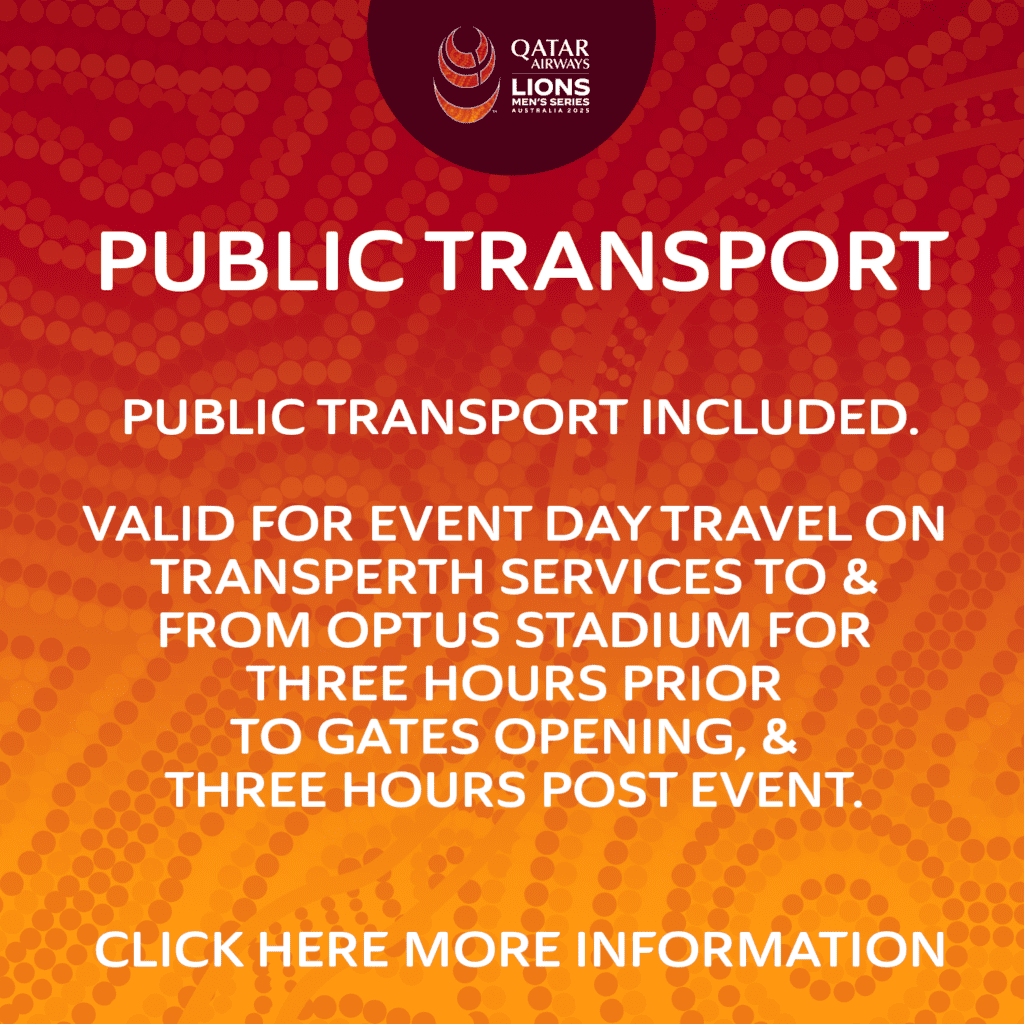
OPTUS STADIUM

For more information: https://www.transperth.wa.gov.au/

Gio Stadium

Public buses are free for anyone with a match ticket so you just need to present your ticket on your mobile device when boarding the bus.

https://giostadiumcanberra.com.au/gio-chartered-buses-2/

Accor Stadium

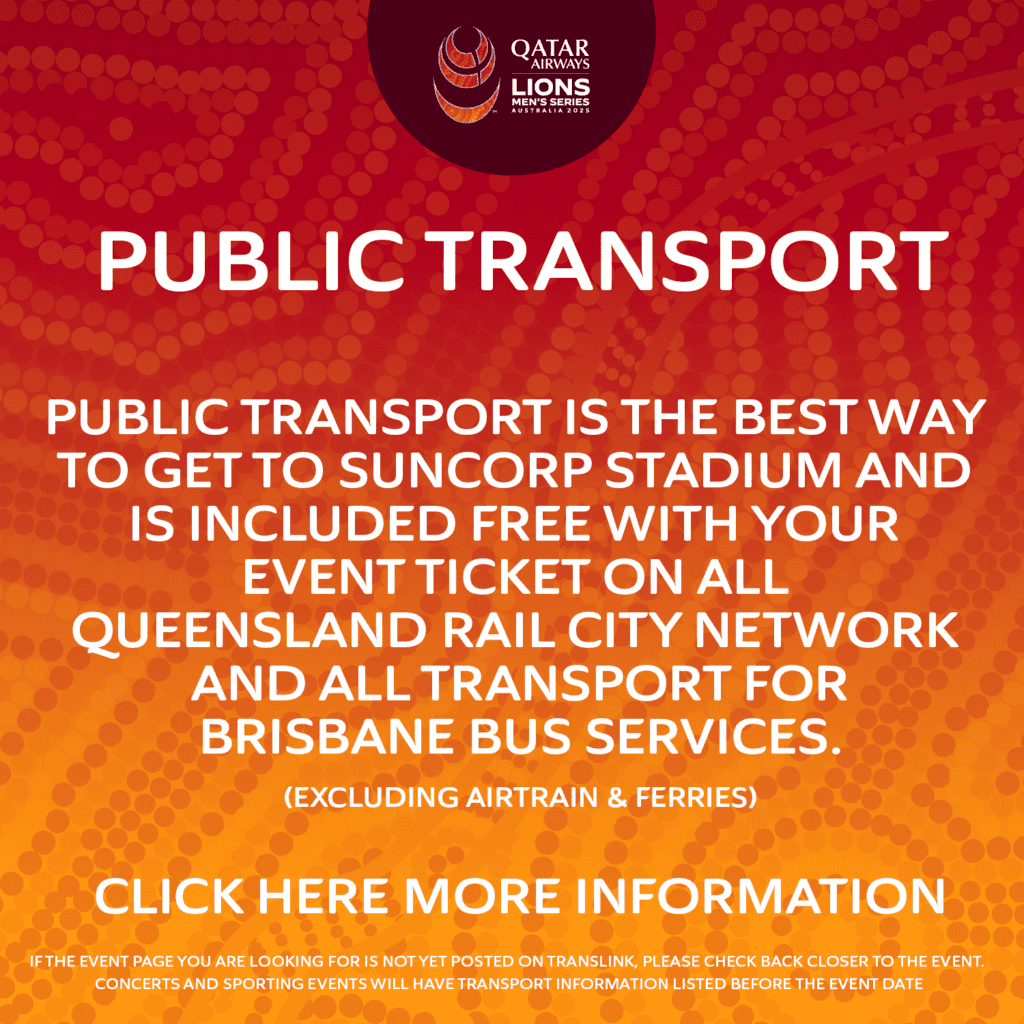
SUNCORP STADIUM

Adelaide Oval

Adelaide Metro provides public transport to the Oval, which is accessible by bus, train and tram. These services will be free with a match ticket which must be shown on your mobile device.

Allianz Stadium

Match tickets to the game include travel to and from Moore Park on public transport services – Just show your match ticket on your mobile device to transport staff when boarding.

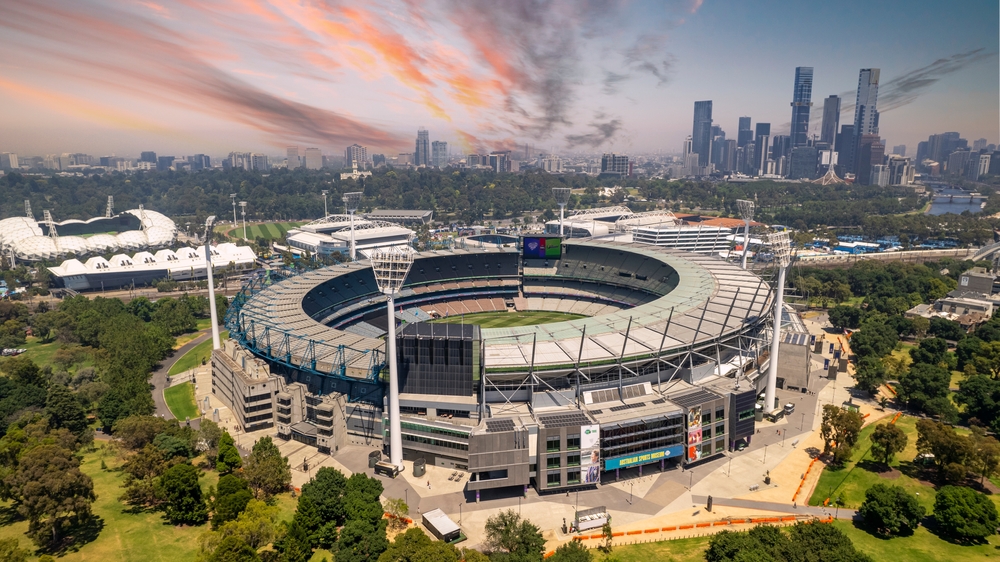
MCG & Marvel Stadium

Matchday transport is not included in your ticket. However, getting to the stadiums is easy and convenient thanks to Melbourne’s Free Tram Zone, which covers key areas of the city including routes to both Marvel Stadium and the Melbourne Cricket Ground (MCG).  

For more information – https://official.lionstour.com/booker-information-city-guide-melbourne/

Day Trip to Adelaide

Wednesday 30 July - Departs 9:30 AM / Returns 17:00 PM

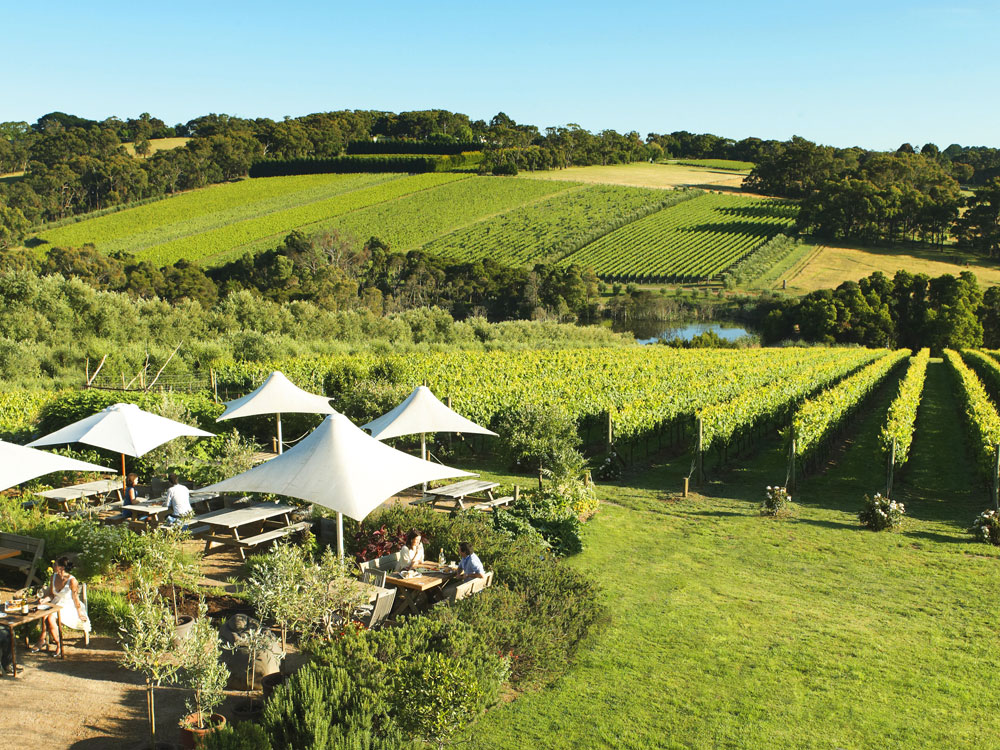
The Barossa is in South Australia, about 70km north-east of Adelaide, the state’s capital city.   Your trip will include a visit of the city centre, The State Library of South Australia and lunch at a local wine bar and kitchen. 

The State Library is the information heart of South Australia, located in the North Terrace Cultural Precinct.  You will have the opportunity to explore all three buildings: the award-winning contemporary Catherine Helen Spence Wing with its iconic glass foyer, the Mortlock Wing with its 19th century Victorian splendour, and the 1861 heritage listed Institute Building.

Sweeping stadium views, stylish bar and lounge, premium menu and extensive wine list.  Bespoke Wine Bar & Kitchen is one of Adelaide’s most impressive dining experiences.

Extending across level three of Oval Hotel and into the iconic Adelaide Oval, Bespoke’s unique setting makes a stunning backdrop lunch.

Executive Chef Daniel Simpson’s modern Australian menu brings bold flavours to life through fresh, seasonal produce.  Two drinks are included, and you may choose from house wine, beer or a soft drink.

After lunch you will be transferred to the North Terrace, Adelaide city where you can choose to spend your time either at Rundle Mall, The Art Gallery of South Australia or South Australian Museum.


PLEASE NOTE:  We have been advised that the carpet is being replaced in the Mortlock Chamber (section of the library) and we are now unable to conduct tours through this section during July so we will amend the Private tour of the State Library slightly and now include access to the basement (old & rare artifacts storage) which is an area of the library usually inaccessible to the public. 


Private 60 minute tour of State Library of South Australia | 30 July 2025 – 11:00am

Guests will have the opportunity to explore one of South Australia’s great institutions and take a look behind the shelves. An expert librarian will take you on a walk sharing stories of how the State Library began. Your experience starts at the historic Adelaide Circulating Library to learn the history of the building. By 1861, the collection of books held there was to became the first public library in South Australia. The Adelaide Circulating Library has been used in the past as a backdrop to several movies including Shine and Gallipoli. Continue your way to the basement to see some of the interesting old & rare artifacts housed in the library. Discover how the state’s most important treasures are maintained in the state-of-the-art storage and how the preservations team cares for the collection. 

Legends that have joined us on previous experiences